October 21, 2026
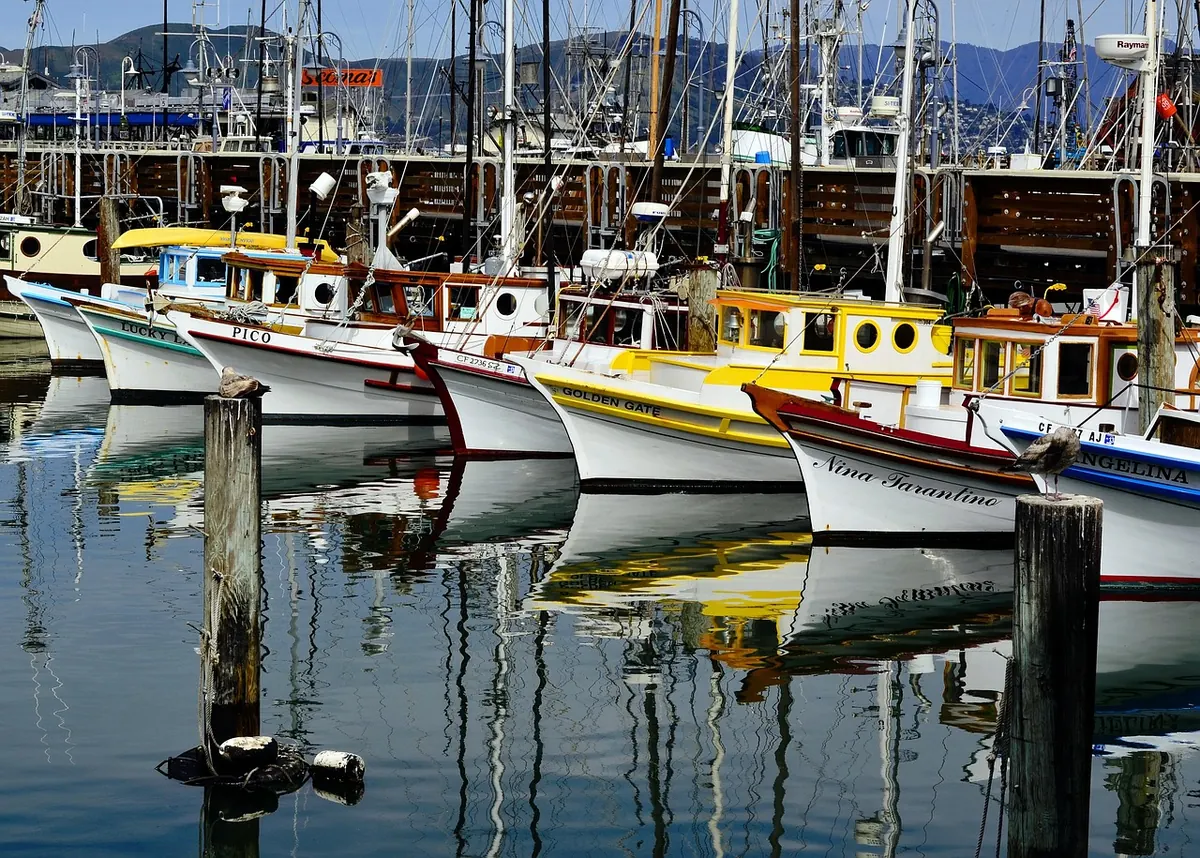
Stand at the entrance to a working harbour and you can see two businesses running side by side. On the water, boats sit in rows along the pontoons, halyards ticking, tenders nudging the stern. Behind the seawall, a structure of steel and aluminium holds another fleet entirely: hull stacked above hull, outboards tilted clear of the beams, keels pointed at the sky. Both are berths. Both are rented by the metre and the month. They are not the same product, and knowing which is which changes how you plan a stop.
What a Wet Berth Actually Is
A wet berth is what most people picture when they hear the word marina: a floating pontoon, a finger to tie to, and a boat that stays in the water — for the night if you are passing through, for the season if you are based there. You walk down the gangway with a bag of groceries, step aboard, and cast off whenever the weather suits you. No queue, no launch appointment, no one to call.
Berths are usually charged by length overall, which is why marina staff ask for your boat's exact measurements rather than a rough description. Visitors pay by the night; locals pay by the month or the season and often hold the same spot for years. Liveaboards and long-term cruisers gravitate here because the boat is already afloat at seven in the morning, and because you can sleep in your own bunk.
The trade-off is that a hull sitting in salt water is a hull at work. Fouling builds on the bottom, anodes wear, antifouling has to be renewed, and the hull gets scrubbed or hauled on a schedule. Marinas with wet berths also have to keep the water deep enough for everyone: dredging, silting, tide range and swell are permanent concerns, and the berth that suits a shallow-draft motorboat may be useless to a fin keel.
How Dry Stack Storage Works
A dry stack is a warehouse for hulls. Your boat sits in a cradle on a rack, usually four or five tiers high, and a forklift moves it to and from the water. You call ahead, give an arrival time, and by the time you park the car the boat is floating at a waiting pontoon with the engine down and the cover off. You load your gear and go. On return, you hand it back, and staff rinse the hull, flush the engine and tuck it away.
Stacks are built for boats that can be picked up: outboard and sterndrive powerboats, RIBs, small centre consoles, dayboats and sport boats. Marinas publish maximum length, beam, weight and height above the waterline, and those limits are hard ones — a boat with a fixed keel, a saildrive, a tall mast or a heavy inboard simply cannot be handled by a forklift, which is why you rarely see sailing yachts in a rack.
What you give up is spontaneity. Access is limited to staffed hours, so you cannot wander down at eleven at night to check a bilge pump or sit on deck with a drink. You cannot sleep aboard. And you are relying on someone else's schedule during the busiest weekends of the year.
Who Chooses Which, and Why
Picture a family with a six-metre RIB. They go out on Saturday mornings in summer, a few evenings after work, and once in a while for a long weekend. A trailer in the driveway is a nuisance and a wet berth is more than they need. Dry stack suits them: the boat stays clean and covered, out of the sun and out of the water, and launching takes minutes rather than an hour of ramp queueing.
Now picture a couple cruising for three months with no fixed plan. They need to be aboard at odd hours, to fix things, to sleep. A wet berth is the only sensible answer.
Charter operators usually stay wet because guests, cleaning crews and turnaround times demand it. A marina with a shallow entrance, a small basin or a heavy silt problem may add a rack instead of dredging. And someone with a trailer and a garage at home uses neither.
What the Mix Tells You About the Marina
Water area versus airspace
A wet berth consumes water surface; a rack consumes land, stacked vertically. When you see racks growing while the pontoons stay the same size, you are usually looking at a marina that has run out of basin — or one that would rather not spend the money keeping a channel deep.
The equipment bill
Racks are capital: forklifts, cradles, a travel lift, trained operators, insurance, and a shed that needs maintaining. Wet berths bring steadier income but demand dredging, pontoon repair and a breakwater that keeps the swell out. A marina offering both is balancing long annual contracts against the throughput of day launches.
The rhythm of the week
Watch a stack on a weekday morning and it is half empty; watch it on a Saturday in July and the forklift never stops. Watch the pontoons and the same boats are there for weeks. Which one fills first in spring tells you exactly who the marina serves.
Questions Worth Asking Before You Commit
- Does my boat actually fit? Measure length including outboards and davits, beam, height above the waterline, and weight with full fuel, water and gear. Compare against the published limits rather than a phone estimate.
- When can the boat be launched? Ask about staffed hours, how much notice is needed, and what happens if you arrive late on a busy Sunday.
- What is included? Launch and retrieve charges, rinse, engine flush, fuel, cover on and off — these vary widely and add up over a season.
- Can I work on the boat on site? Many stacks forbid sanding, grinding and painting for fire and dust reasons. If you like doing your own maintenance, ask first.
- What is the storm plan? Racks stand in the open and catch wind. Ask about tie-downs, haul-out procedures and whether the yard clears the racks. Check your insurance policy for any requirement about where the boat must be during named storms, and confirm the wording with your insurer or broker.
- For a wet berth: depth at the lowest tide, tidal range, exposure to swell, mooring type, shore power and water, security, liveaboard rules, and whether the berth is yours alone or shared with a neighbour.
Reading a Marina From the Quay
Next time you walk a harbour, look at what is stored where. A forest of masts means wet berths and a cruising trade; a bright wall of white hulls on racks means day boaters, short trips and a launch schedule that peaks hard at nine on Saturday morning. Neither is better. They are answers to different questions.
Practically, that means calling ahead rather than turning up. Ask whether the marina takes visiting boats at all, whether the berth is alongside or a finger, and what depth to expect. If you are booking a launch, confirm the time and the retrieval slot in the same conversation, and build in a buffer for the queue at the hoist. Ten minutes on the phone before you leave saves an hour of drifting at the harbour entrance.
Photo: eyeImage / Pixabay