October 22, 2026

The first ferry usually clears the breakwater before the cafés have finished setting out their chairs. Stand on the quay at that hour and you will see the same small drama: three or four early arrivals walking the length of the terrace, hesitating, doubling back, then sitting somewhere that turns out to be either dazzlingly bright or directly behind a delivery van. Picking a seat is not a complicated skill, but it is a learnable one, and the gap between a forgettable coffee and one you remember for years is often about four meters and one look at the sky.
Read the Light Before You Look at the Menu
Morning light at a port arrives low and almost horizontal, which means it behaves nothing like the noon sun most people picture. On a quay that faces east, the first two or three hours are direct and bright; the same row of tables will be comfortable shade by eleven. On a west-facing waterfront it is the reverse: cool and shaded now, warm and often crowded later.
Walk the row once with your back to the sun, then turn around. If you have to squint, you will not be able to read, check a ferry timetable, or look at anything but the inside of your cup. The approach most regulars use is simple: sit with the light at your side or behind you, and face the water. The harbor will be lit, the boats will show their colors, and your eyes will not have to work for it.
Reflections matter as much as direct sun. Water throws light upward, so a table under a wide awning can still feel glaring if the whole basin is in front of you and low sun is bouncing off it. A small shift — two tables along the wall, or behind a planter — often fixes it completely.
Shade Comes in Grades, and It Moves
Not every shaded seat is a cool seat. Roughly in order of comfort on a summer morning:
- Solid building shadow. The most stable and the coolest, sometimes too cool, since stone walls hold the night's chill and the corner where two streets meet a quay can funnel wind.
- Fixed awnings and canopies. Reliable and easy to judge. Colored canvas changes the whole feel of a table; deep red and green filter the light in a way that makes everything on the table look odd after a while, while cream and white stay neutral.
- Trees. Dappled, cooler and alive — but plane trees and lindens drop small debris into an open cup, and the shade patch drifts with every gust.
- Umbrellas. Portable shade that a light breeze can turn into a moving target. Fine before the wind picks up, frustrating afterwards.
Whatever you choose, ask where the shade will be in forty minutes, not where it is now. A seat can be perfect on arrival and in full sun by the time a second cup lands. If you plan to stay a while, pick shade anchored to something solid and deep.
Decide Which Harbor You Came to Watch
A port is rarely one thing. Within a few hundred meters you may have a working quay, a passenger landing and a line of moored yachts, and each gives a completely different breakfast.
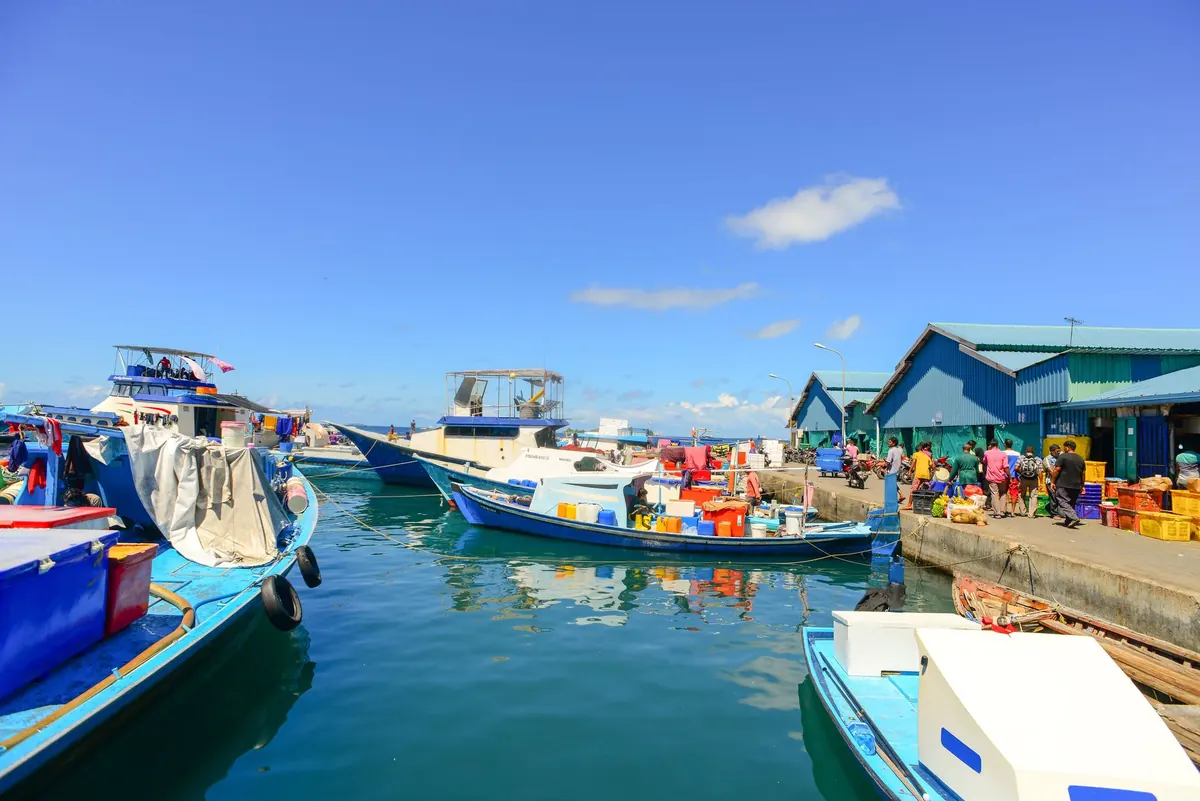
The working side is the early side. Fishing boats come in after dawn, tugs and pilot boats move on their own schedule, and the mooring crews talk loudly because they have to. Sit close for the machinery and the smell of rope and fuel; sit two rows back if you want conversation with your coffee. The passenger landing is the opposite: quiet for a long stretch, then a rush of footsteps and luggage when a boat comes in, followed by silence again. Yachts are the calmest of the three — halyards ticking against aluminum masts, a hose running somewhere — and they generally wake up later than the fishing fleet.
If you have only one morning, match the seat to the traffic rather than the other way round. Front row before seven for the working harbor. A middle table around nine, when the light has softened and the first rush is over.
The Best Seats Are Usually One Row Back
The front row is the obvious choice and often the wrong one. It sits in the walkway used by staff carrying trays, cyclists cutting along the quay, and anyone hauling a suitcase towards a gangway. It also takes the full force of the breeze coming across open water before the town has warmed up.
Move one row back and a lot improves at once. You get a framed view instead of a panoramic one — the harbor seen between two planters rather than spread out and slightly overwhelming. Voices stop competing with the water. And there is a practical bonus: servers pass a middle row more often than a far corner, so you are easier to catch for a refill and less likely to be forgotten.
For real quiet, look for the odd seats: the small terrace up a short flight of steps, the table tucked beside a doorway, the corner where the promenade bends. They are almost never the ones photographed, and that is exactly the point. A slightly obstructed view of masts and water is often more pleasant than an uninterrupted one, because it gives the eye somewhere to rest.
A good port café seat is one where the harbor does the talking and you can sit still long enough to listen.
A Six-Step Check Before You Sit Down
Before you pull out a chair, run through this quickly. It takes less than a minute and saves a great deal of squinting and chair-dragging.
- Light. Face away from the low sun, and make sure the water's reflection is not hitting you straight on.
- Shade depth. Note what cast the shadow — building, awning, tree or umbrella — and whether it will still be there in half an hour.
- Wind. Land and water warm at different rates, so the breeze on a quay often shifts or strengthens through the morning. A wall, a planter or a raised terrace creates a sheltered pocket.
- Traffic. Watch the walking route to the boats for a minute. If your chair back is on it, move.
- Sightline. Decide what you want in front of you — the ferry landing, the masts, the quay itself — and sit so that thing is straight ahead with nothing blocking it at eye level.
- Sound. Sit for ten seconds without ordering. If you cannot hear yourself think over a generator or a loudspeaker, take the next row back.
The First Ten Minutes
Once you have chosen, commit. Order something simple and small enough to finish before it cools, and keep the table uncluttered: a cup and a book take up less room than a spread of plates, and a small footprint makes it likelier that staff will leave you in peace for a second round.
Then keep an eye on the shade. If the sun reaches your table before you have finished, you have two options: shift one seat along the wall, or accept it. Both are fine. What is less fine is dragging furniture across a busy terrace, or holding an empty table in the front row while the harbor's best hour happens behind you.
Aim to settle in before the light hardens and the quay fills. The harbor at seven and the harbor at ten are two different places, and the seat you choose decides which one you get.
Photo: Olivier Morneau / Pexels